
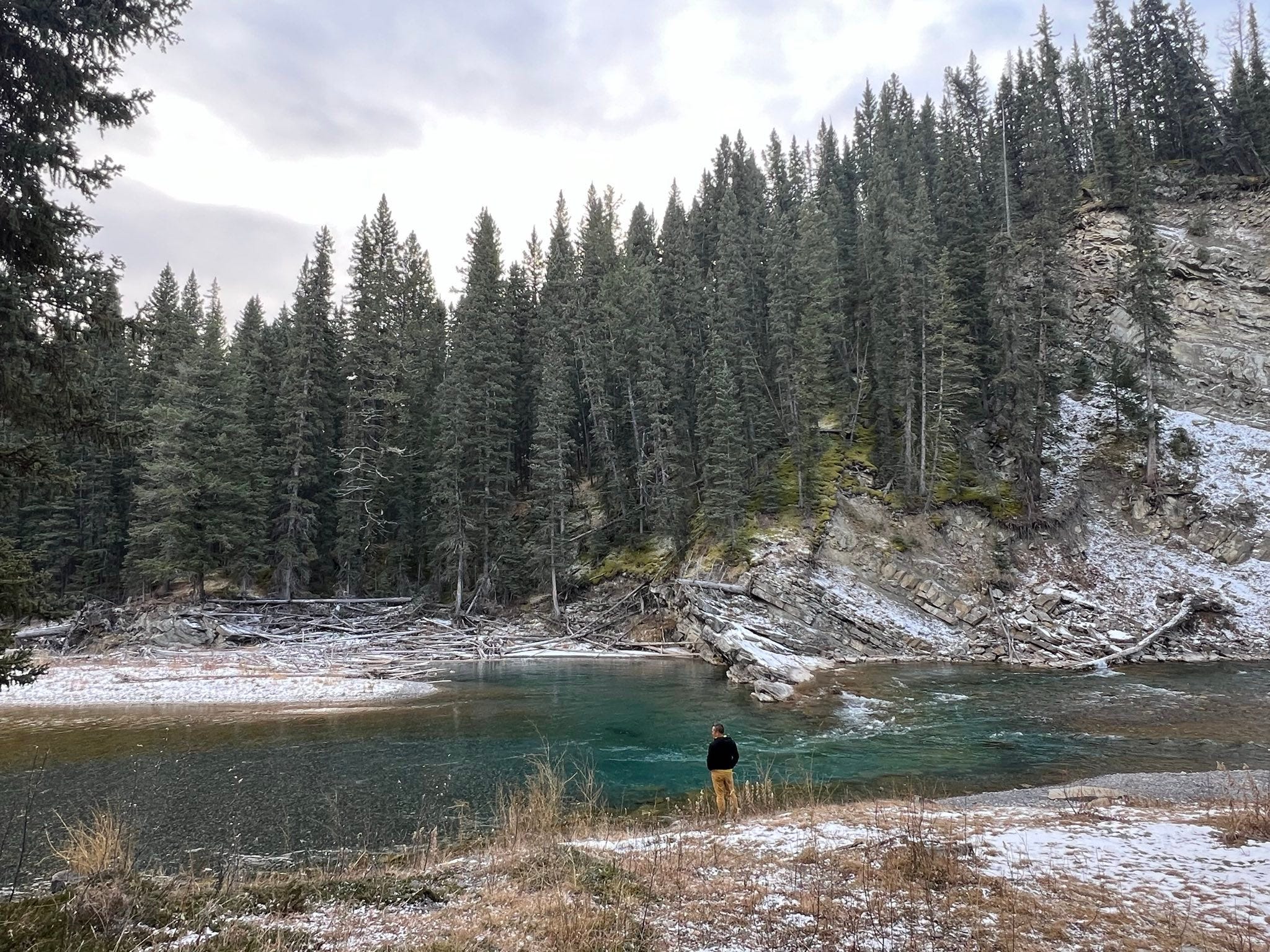
I went down to the river this morning to listen
It flowed through the valley, moving swiftly through the pebbles and rocks
Then slowing to an ebb in the deep waters, almost still
Is this the way to move?
Slow down when it's necessary to slow down; speed up when it's necessary to speed up
Move at the speed of trust
Ghost river, Alberta (November 2024)
"What we want to do is like acupuncture!”
It came to me suddenly one evening as a small group of us sat together around the kitchen counter. We had been sitting together over many months, trying to imagine how our work interlaced. Each of us seemed to be playing a role at different scales in the social impact ecosystem: coaching individuals, supporting organisational change, mediating between institutions and government, designing systemic interventions. We needed to imagine a practice that was able to perform a ‘certain kind of’ acupuncture on a system. That is to say, to have such knowledge of the invisible tendrils of the system in question so as to be able to alter its outcomes in a non-linear way, by applying pressure to targeted areas, some being visible, others not.
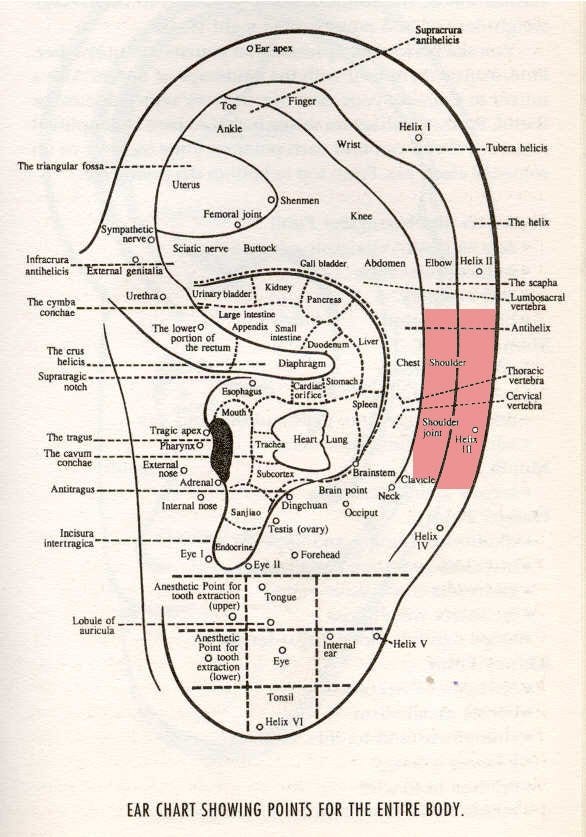
Acupuncture has a deep and rich lineage, viewing the body as an interconnected system, where a pin prick in the inner ear can heal pain in other parts of the body. In traditional Chinese medicine, acupuncture is described as a technique for balancing the flow of energy or life force — known as chi — which moves through pathways, or meridians, in the body. It is thought that the outer ear contains a ‘map’ of the whole body and that specific points on this map match up with certain parts of the body healing the whole system. Unpacking the acupuncture metaphor can be useful to further describe a way of working together that is one part innovative, one part return to a deeper ancestral knowing, and one part healing.
What is Systems Mediation?
Rooted in the principles of inner work, systemic thinking and mediation, Transition Bridges Project is experimenting with a practice we are calling systems mediation. It tends to underlying intersectional inequities, and supports transitional and transformational challenges at multiple scales - individual, organizational, systemic, metaphysical - in a holistic way and in relationship to each other, much like an acupuncturist would treat a body in pain by pricking the collar bone, abdomen and the webbing between the toes, in order to heal the liver.
Fractal is another concept that comes to mind when using this example. A fractal is a never-ending pattern. Fractals are infinitely complex patterns that are self-similar across different scales. The concepts of fractals, which adrienne maree brown lays out in Emergent Strategy is that social conditions are fractal, meaning they follow the same pattern but at different levels. The pattern is the same, but the levels are different. In fractals, if we can change the pattern at one level, it affects the other levels as well.
The journey into systems mediation is one of discovery and collaboration - as it began around the kitchen counter. It asks a simple yet powerful question: "How is systems mediation showing up in our work and communities?" This question is guiding us through a process of collective inquiry that explores the challenges people face, the innovative solutions developed, and the transformative moments that have shaped their work. We see these relationships as participant-driven opportunities to explore common challenges, where everyone is a part of the inquiry, because no one person has a full picture, and the way forward is co-directed and co-stewarded.
What problem is this a solution for?
This is a great question from a friend of mine Michael Lam, Senior Development Director at the Toronto Community Housing Corporation. Let’s take his context as an example. Toronto Community Housing (TCHC) is the largest social housing provider in Canada. Owned by the City of Toronto, it is operated as a non-profit and represents a $9 billion public asset. TCHC houses tenants in 106 of Toronto's 158 neighbourhoods, providing homes to over 41,000 low and moderate-income households. Its 92,000 residents come from many different backgrounds with a diversity in age, education, language, mental and physical disability, religion, ethnicity and race.
Michael says that in his work he is often faced with a cluster of civic problems that need to be juggled simultaneously, and in their totality can seem insurmountable. They include accessibility, sustainability, housing affordability, public health both mental and physical, tenant safety, anti-racism, youth and community engagement, urban revitalization, financial and political frameworks, civil infrastructure etc. etc. As he says, any one of these issues are massive, hairy balls of complexity that intersect and entangle around critical issues such as social housing.
The authors of “These Times Ask More of Us” point out that in times of cascading crisis the chaos can be destructive and confusing, but can also help us “see what beforehand was unseeable.” These destabilizing contexts often reveal “hidden patterns in which we have been enmeshed”, enabling us to disentangle ourselves enough to regard those systems with renewed curiosity (Cassie Robertson and Sofia Parker, Practices for Transitions in a Time Between Worlds. SSIR Supplement/Winter 2025). Returning to the metaphor we have been using, in Chinese medicine, acupuncture is most commonly used to treat pain. Similarly, the identification of crucial acupoints in a city or a system of care that is in crisis, can provide an anchor, and scaffolding that solidifies the terrain to improved circumstances. In Michael’s context this involves a long term commitment to frequent engagement with tenant communities to create maps of the invisible lines that lie outside of the ones more commonly understood. Community culture and history, especially in marginalized groups, can inform effective intervention better than urban design guidelines or zoning maps.
Physical infrastructure can become social infrastructure. Roads overlaid with an appreciation of local pedestrian or bicycle routes can point to a public realm of generative possibility rather than simply facilitation of traffic flow; stormwater cisterns turned inside out become urban refuges for wildlife, flood mitigation, irrigation systems in one.
Prioritization of the local, the human and the idiosyncratic in thinking of systems offers another view into diagnosis and treatment of its ills. Systems work is less precise than acupuncture insofar that we don’t understand the systems in their interrelating totality as has been observed in the human body. But is there merit to a hypothesis that considers the stories of a place indicative of its ley lines, its invisible meridians?
These are precise and directed interventions, nudging towards change yet adapted to arising circumstances. Acupuncture helps the body heal itself. Many modern Western practitioners view the acupuncture points as places to stimulate nerves, muscles and connective tissue, seeking to use our body's natural reactions to counter an ailment. Traditionally, there exists a deep literature and practice around the Five Elements of health, where the same points are stimulated to warm, cool or tonify various channels and centers of this subtle physiology. In either case, this is a practice that does not seek to annihilate or excise that which is diseased, but to provoke a systemic response to meet it.
Comparisons to Western medical practice often seek a polarity, a recent one highlighting the differences in Eastern and Western histories of medical discovery, through observation of living systems versus the dissection of cadavers, respectively. As tempting as it may be to make broad statements, it remains that both are independent approaches to systems work that can be effective, albeit partially.
What does it mean to be a healer?
Inspired by, yet different than, a collective impact model - which is often criticized for its lack of action and concrete interventions, as well as its funder-driven outcomes and models of intervention - acupuncture in a civic context is practiced by a multiplicity of actors/healers, like Michael, with varied experiences and expert skill-sets. It is most definitely a collaborative endeavour, but one in which we can bring our own unique creative magic and capabilities. Like a conductor at a symphony, Michael orchestrates change with his right and left hands differently, the right hand points with authority towards concrete solutions to immediate problems, the left hand moves with grace, allowing imagination to intercede in a complex situation. It is perhaps not surprising that acupuncture is a helpful metaphor for this approach. These are not typically massive and invasive interventions, like amputation - although at times this may be called for - but short, targeted interventions that relieve pain and help cure disease, with the acknowledgement that people can heal themselves.
Finding a way forward often asks systems mediators to be open to (unusual) learning partnerships and stretching their personal and professional boundaries in order to meet people where they are. Since trauma lives in systems and in the individuals that provide leadership within these systems, the healing power of relationships is an important leverage point to fundamentally rewire a system’s behaviour and outcomes. It involves creating spaces where people can show-up authentically, negotiate, engage both their knowing and unknowing, and learn from each other in pursuit of making a difference. These spaces can spark collective healing processes, through art, storytelling, meditation, rest, and somatic practices that aim to build trust. Finally, by placing community and lived experience at its core, systems mediators redirect centres of gravity, uncovering untapped sources of power. They create an environment where community leaders, social movements, institutional partners and grassroots initiatives can experiment with approaches to do things differently. Here new norms can emerge, offering alternative approaches, often sitting outside of dominant cultures and systems. Or when present within systems, playing trickster roles that are deliberately more subtle and less visible.
The 28 pulses
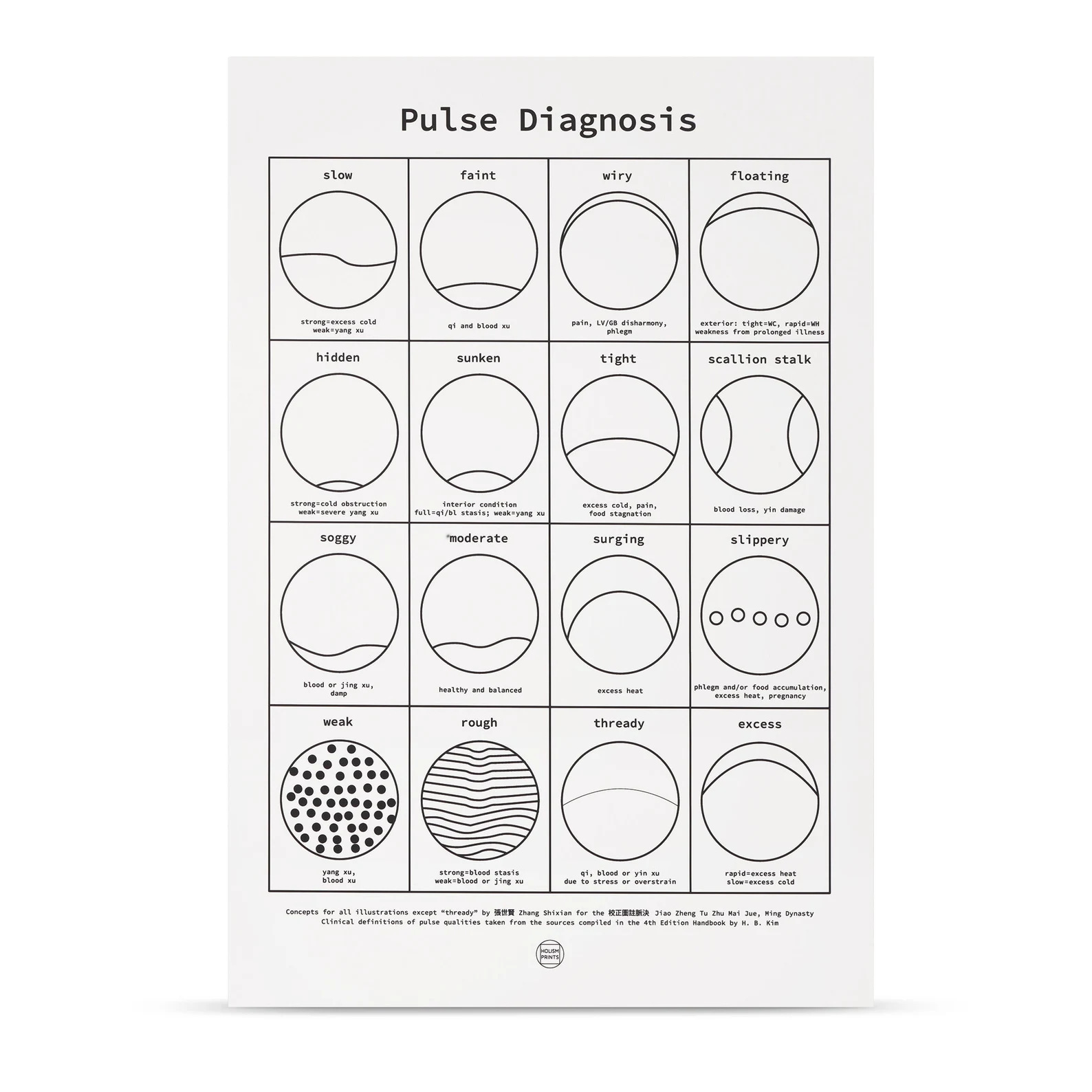
We come to the final acupuncture analogy. In Western medicine, the heart rate is typically measured as part of a standard physical exam. In Chinese medicine, pulse diagnosis is a significantly more developed diagnostic tool, one that practitioners use to assess the health of all the major organ systems of the body. Before modern imaging techniques, healthcare practitioners needed ways of evaluating what was happening inside the bodies of their patients. In addition to assessing the heart rate at the pulse felt next to the wrist, traditional pulse diagnosis also assessed up to 28 different pulse qualities. Each of these qualities gave the practitioner information about the state of the patient’s health and well-being. This multiple pulse diagnosis offers a window into the inner workings of a system’s wellbeing.
This is practice at the deep roots level, at a scale that values slow and steady work, and the layering of relationships. Like the layering of the pulses, it involves a reverent curiosity, and recognizes the significance of context, building connections, bridging diverse communities, and prioritizing inner work and healing as integral components of systems change. This deep seeded inquiry moves below into the tissues, and is referred to as Scaling Deep, analogous to a healing diagnosis and practice that layers in 28 different pulse qualities. This deep-rooted practice delves into alternative ways of knowing and being, embracing heart-centered and spirit-driven wisdom that is intuitive, embodied and life-affirming.
Shifting paradigms in contexts, like the one Micheal is working in, can be transformative and can help sustain authentic community connection and meaning at a time when people are feeling adrift and fragmented. This perspective shift borrows from ancestral practices, as well as contemporary perspectives, in order to reconfigure relationships to self and each other, and to the environment we live in, supporting a more generative story. Fundamentally, it defines human beings, like Michael, as “possibilities, in process” - the process of becoming, of development and of change.